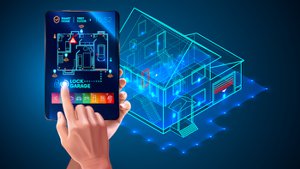
Smart Home Features Every Florida Homeowner Should Consider
Smart homes are quickly becoming a standard in Florida living—and it’s easy to see why. With technology that streamlines daily routines, homeowners can remotely manage everything from thermostat settings and lighting to water usage, security systems, and overall energy consumption. Not only does smart home technology boost energy efficiency and strengthen home security, it adds significant value when it’s time to sell. Here's a breakdown of why smart homes are appealing in Florida and the key features worth considering.
Smart home security systems typically include interconnected devices like cameras, motion detectors, door/window sensors, alarms, and smart locks, allowing for remote monitoring and control, and often integrate with other smart home features.
Security cameras let you keep an eye on things in real time, whether you’re inside or out. They capture video (and sometimes audio) and send it wirelessly—usually over Wi-Fi—so you can check the footage from your phone or computer. The videos can be saved locally or in the cloud, so you can go back and review anything you missed. Smart doorbell cameras take it a step further. They let you see and talk to whoever’s at your front door, even if you’re not home. Plus, they can record video so you always have a record of who stopped by.
Sensor technology is another important component for enhanced security, with such features as Door/Window Sensors, Entry Sensors, Glass Break Sensors, and Motion Detectors, all of which trigger an alarm and notify homeowners of any detected movement or presence. Many homes today are also equipped with Smart Locks that use electronic mechanisms and wireless communication to allow remote control and keyless entry.
A smart thermostat is a connected device that uses Wi-Fi and learning algorithms to automatically optimize your home’s heating and cooling. Models with the ENERGY STAR label are independently tested using real-world performance data, proving they can help reduce energy use without sacrificing comfort.
Many smart thermostats can learn your temperature preferences and create a customized schedule that automatically shifts to energy-saving settings when you're asleep or away. Some models also use geofencing technology, which detects when you're heading home and adjusts the temperature in advance—so it’s just the way you like it when you walk through the door.
Wi-Fi-enabled thermostats also let you control your home’s heating and cooling from anywhere using your smartphone. ENERGY STAR–certified smart thermostats go a step further by automatically switching to a low-power standby mode when not in use. They also provide detailed data on equipment usage and temperature trends, helping you better manage your energy consumption. Plus, periodic software updates ensure your device stays current with the latest energy-saving features and smart algorithms.
Smart lights have tiny chips inside that let them wirelessly connect with other devices. You can link each one to a mobile app, smart home hub, or compatible accessory to control your lights from anywhere—whether you want to adjust brightness, change colors, or set up schedules. A typical smart lighting setup might include things like light fixtures, sensors, switches, dimmers, and controllers.
Smart lighting hubs are like the command centers for your lighting setup. They connect your lights to your home network, making it easy to control them from your phone or with voice commands. You can set schedules, create automations, and even sync them with other smart devices in your home. Smart lighting controllers give you hands-on control from anywhere. Whether you want to dim the lights, change the color, set timers, or use voice control, these tools make it super convenient—and they help save energy too.
Smart lighting sensors—like motion and ambient light sensors—keep an eye on what’s going on around them. They can tell when someone walks into a room or when the natural light changes, and they adjust your lights automatically to make things more convenient and energy-efficient. Smart LED bulbs hook up to your home’s Wi-Fi or a hub, so you can control the brightness, color, and warmth of the light right from your phone. And if you’re not ready to swap out all your bulbs, smart switches are a great option—they replace your regular light switches and let you control your existing lights remotely.
Smart Plugs and Energy Monitors
Smart plugs and energy monitors offer benefits like energy savings, convenience, and safety by allowing you to remotely control devices, monitor energy consumption, and schedule usage, ultimately leading to lower electricity bills and a more sustainable lifestyle.
Smart plugs are Wi-Fi-enabled adapters that fit into standard wall outlets, giving you remote control over connected devices through a smartphone app, voice commands, or automated schedules. They effectively turn traditional appliances into smart ones.
Energy monitors, on the other hand, track electricity usage by detecting the flow of current—either at the main electrical panel or on specific circuits—and display real-time data and trends through apps or online dashboards.